With Gratitude Ep 4: Live with Eli Bernstein at Tech Week GR
If everything that isn’t the patient took care of itself, how much of your team’s attention would go back to the person in front of them?
Topics We’ll Explore:
- Where the time actually goes between a treatment decision and a patient starting care and what another two weeks costs a person and their family
- Why a decade of evidence-driven care made medicine sharper and quietly cost us the personal relationship, and why we no longer have to choose
- Why healthcare’s problems aren’t mysterious, just structurally hard and what changed to make them solvable
- What the durable investments are when the ground is moving this fast. The knowledge base, a multi-model world, and how a CPO decides what gets built next
- Where the human stays in the loop permanently, no matter how good the models get
You’ll hear Eli on what he saw sitting beside the people who run these workflows, honest examples from inside provider organizations, and what his customers actually do with the hours they get back. Which, in his experience, is usually build something better for their own patients.
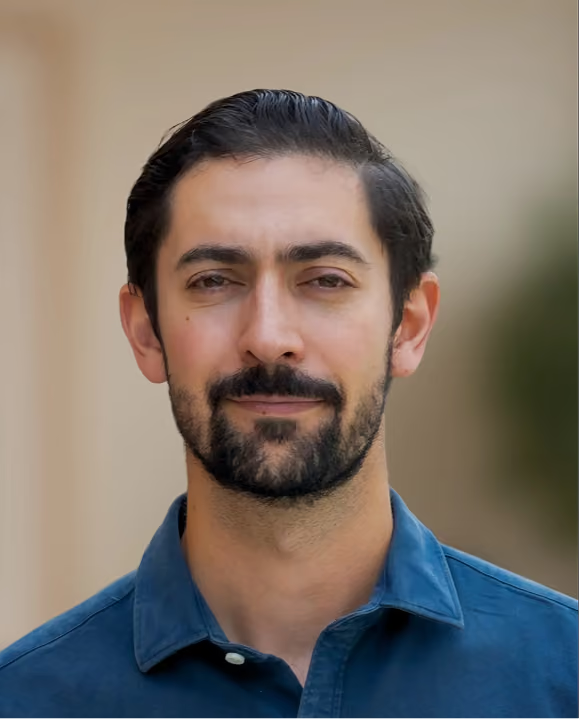
Eli Bernstein
Co-Founder and Chief Product Officer, Ascertain

Stephanie Hogen
CCO, Vervint
With Gratitude Ep 4: Live with Eli Bernstein at Tech Week GR
10,000' Podcast
The Full Recap
Eli Bernstein found his company’s founding idea by sitting in a lot of rooms. He spent hours in clinicians’ offices and healthcare administrative departments, next to the people he describes as the engine of the American healthcare system, the ones almost nobody outside the building ever sees. What he watched them do was remarkable and a little absurd. They jumped across two monitors and fifteen different applications to move one piece of information from one stakeholder to another. Often they were on a phone call with three people at the time, and they knew that a dropped call or a missed detail would affect a patient’s care.
“You just get really astounded at how exceptional these individuals are, despite the amount of pressure that they have,” he said.
That’s where Ascertain came from. Eli, Ascertain’s co-founder and chief product officer, joined Stephanie Hogen, Chief Consulting Officer at Vervint by Koniag Tech, on stage at Grand Rapids Tech Week for an episode of With Gratitude. Over the conversation he laid out a working theory of where healthcare AI creates value and what makes that value hold up.
Healthcare as a translation problem
When ChatGPT pushed large language models into the mainstream in late 2022, everyone was asking where the technology could actually make a difference. Ascertain approached the question analytically, and the answer Eli’s team reached changes how you look at healthcare software. “So much of healthcare is almost a translation problem,” he said. Data sits in one system and has to pass through three others, looking slightly different in each. The name of an insurance company as entered at a clinic’s front desk doesn’t match what the payer calls itself, and neither matches what the government registry lists.
Matching those names takes little reasoning. For years the map that connects them existed only in the heads of experienced people who had worked the same desk for a long time. That’s why decades of integration projects never solved it: you can’t write a deterministic rule for a thousand near-misses. What changed is that a technology finally arrived that could take subjective, messy signals and connect them probabilistically, “the same kind of probabilistic approach that many of us take in our jobs,” as Eli put it, “because we’re not machines. We don’t just go point A to point B reliably every time.”
Stephanie pressed on what the gap feels like from the patient’s side. You find a lump, you wait two weeks for an appointment, and then you learn the appointment was only to schedule the test. Eli confirmed that’s how it works. Fifteen boxes have to be checked, and if they aren’t, care doesn’t get delivered. “When you compare that to the actual need of the individual, it’s kind of really sad how much space and the size of the gap that exists between the two.”
With one of the largest oncology practice groups in the country, Ascertain cut turnaround times for office visits and invasive procedures by roughly 40 to 50 percent and gave back about 95 percent of the time the team had been spending on payer phone calls. Eli doesn’t count that second number as headcount saved. What it means, he said, is that when you don’t have to make a hundred phone calls to a payer this week, you can pick up when the anxious patient calls.
After ambient AI, the back office
Stephanie offered the clearest proof case already out there. Her pediatrician, thirty-five years in practice, used to spend every Sunday writing up the week’s notes, twelve hours a week for years. With ambient AI that’s down to two, which has given her more undivided attention in the exam room, dinners with her family, and golf with her husband.
Eli agrees that ambient documentation is one of the few technologies in this wave that has delivered value across an entire ecosystem. His interest is in the step after it. “Okay, we have our notes now, and oftentimes better, more structured notes. So now with this additional context, the question is: what do you do next?”
The system still breaks at that next step. A patient moves from primary care to a cardiologist or an oncologist and enters what Eli calls “a fun world of healthcare administrivia.” The notes go to the insurer, the insurer reviews and approves, everything gets shared with the specialist, and the cycle repeats at every step of care.
Healthcare has also become a team sport. Independent labs, imaging centers, and ambulatory surgery centers mean that five, six, or seven stakeholders now have to be coordinated around a single surgery or infusion. “It’s generally been managed by people, by faxes, by phone calls, and oftentimes printed pages stuffed in folders.”
Ascertain took on that work. The company calls its model service as a software, because the customer gets the outcome instead of another platform to operate. It also stays out of patient contact on purpose. Eli has little patience for companies racing to make it impossible to reach a human. He remembers an authorization assistant he shadowed in Virginia who could recognize a caller within five seconds and ask about their mother or their dog, a relationship built over years at that desk. In an industry that runs on trust, automating the background work leaves more room for conversations like those.
Planning for better models
Stephanie asked how you build something durable when the foundation moves this fast? Two years ago we thought AI was one thing. How do you ship something in three months when you don’t know what’s underneath it?
Eli called it the key question of working in AI today, and he doesn’t expect the pace to slow. His approach is to assume the next model is ten times more capable and ask what you’d still need to solve your problem.
For Ascertain, the answer is context: knowing that certain procedure codes carry specific medical-necessity requirements, or that a single payer operates fifteen plans, each with its own line of business and its own portal for submitting authorizations. “If you are able to kind of have the map and design the map, then as these models get smarter, you give them all of the tools that they need to go out there and be successful.”
That makes the map a business strategy as well as a design choice. Models don’t come with that domain knowledge, so a company that has built it gets a free upgrade every time the labs spend money on training. His advice to builders was blunt: you know these things are going to change, so figure out what’s durable. “It’s really that knowledge and context around your particular domain, the problems that you’re particularly trying to solve.”
He gave the healthcare leaders in the room similar advice. Everyone already knows which workflows are broken; spend a week anywhere and you’ll find them. Pick one, capture as much data around it as you can, and identify the dependencies. You don’t have to solve all of it, and you no longer have to make fifteen systems talk to each other the way you used to. If you understand where data comes from and where it has to go, you can make a bigger dent than was ever possible before.
Why this is a gratitude story
Stephanie closed the way every With Gratitude conversation ends, asking Eli to finish the sentence “gratitude becomes lasting when.” His answer was trust and security.
Bleeding-edge technology rarely arrives with either one, and in healthcare that absence is disqualifying. Lasting gratitude, in his framing, isn’t the “oh wow, that was cool for a moment” reaction. It’s “the undercurrent of almost confidence that, yes, this might actually change the way that we’re able to operate.”
That answer ties back to why he does this work at all. His father was a physician who left practice because the job had become more business than medicine. His co-founder and CEO, Mark Michalski, a radiologist, described the same thing: ten minutes with a patient, twenty-five minutes of paperwork. “I don’t know very many physicians that go into medicine and are like, yes, finally, I get to spend 75% of my time typing.”
Eli’s goal is to close two gaps: the one between the patient and the physician, and the one between the patient and the care they were already approved to receive. He was clear that Ascertain has taken only a small step so far, with a lot more work ahead.
Key ideas for the episode
Healthcare Is a Translation Problem
Ascertain didn'tstart with a grand idea. It started with grunt work: sitting in clinicians'offices, watching people jump across two monitors and fifteen applications tomove one piece of information from one stakeholder to another. What EliBernstein saw underneath all of it was a translation problem. The front desknames an insurance company one way, the payer calls it another, and thegovernment registry lists a third. That context used to live only in people'sheads. LLMs were the first technology that could map those messy, subjectivesignals dynamically.
The Notes Exist. Now What?
Stephanie Hogen's pediatrician spent everySunday for years writing up her week: twelve hours of notes. Ambient AI cutthat to two. More attention for her patients, and dinner with her family. Elicalls ambient AI one of the few technologies that has truly delivered on itspromise. But he's focused on the question it opens up. The notes exist now,often better structured than before. What happens next? Moving that patient totheir next step of care still runs on faxes, phone calls, and printed pages stuffedin folders.
Build the Map, Not the Model
Assume the nextmodel is ten times more capable than the one you're using today. So what do youactually build? For Eli, the durable asset is never the model. It's thecontext. Knowing which procedure codes carry which medical-necessityrequirements. Knowing that one payer runs fifteen plans across fifteen separateportals. Design that map, give the agents the tools to walk it, and every modelimprovement becomes yours. Everything underneath you is going to change. Themap is what lasts.
View full transcript
View full transcript
[00:00:00] Narrator
What if the hardest problem in healthcare technology isn'tintelligence at all? It's translation.
In this episode of Ten Thousand Feet, recorded live duringTech Week Grand Rapids, Stephanie Hogen sits down with Eli Bernstein,co-founder and Chief Product Officer at Ascertain.
You'll hear why Ascertain started not with a whiteboardidea, but with hours spent watching administrators juggle 15 applications andthree phone calls at once. Why prior authorization, referrals, and benefitsverification turn out to be a mapping problem more than a reasoning one. Andwhat it takes to build something durable when the technology underneath yougets meaningfully better every few months.
Eli also shares what ambient AI proved about where this goesnext, why Ascertain deliberately refuses to touch patient communication, andthe one thing he'd tell any healthcare leader to look at first.
Whether you're building in healthcare, buying technology fora practice, or just trying to figure out what actually lasts in an AI product,this conversation offers a clear-eyed view from someone doing the unglamorouswork.
Let's jump in.
[00:01:07] StephanieHogen
Welcome, everyone. So great to see all of you. This is theTen Thousand Feet, the Vervint podcast. This is part of our series WithGratitude, where humans and AI take us next. Because we believe good technologycreates lasting gratitude for the people who use it, build it, and servecustomers with it.
I'm Stephanie Hogen, the Chief Consulting Officer here atVervint, part of Koniag Tech. Allen Debes, my co-host, is not here today. He ison a plane, or probably landed in Morocco, for his 20th wedding anniversary. Sohe likes his wife better than us, which bums me out, but I guess that's part ofthe territory.
And I'm joined with Eli Bernstein, co-founder and ChiefProduct Officer at Ascertain, which builds AI agents for healthcare work nopatient ever sees — prior auth, referrals, benefits verification. Thank you allfor being here and investing in the technology landscape here in West Michigan.
I'll tell you a little bit about Eli. So as I mentioned,he's the co-founder and Chief Product Officer at Ascertain. He spent over adecade in products across healthcare and enterprise software. And I justlearned something about him today that I'm gonna share with all of you. Butbefore helping launch Ascertain out of his venture studio, he worked onScholly, and some more about that in a minute.
Ascertain builds AI for the healthcare work that, as Imentioned, that patients never see, and they call it service as a software, socustomers get the outcome, not the tool. Under the hood is what Eli calls aknowledge base, a feedback loop capturing what the team does, what agents do,what payers say back, and what customers experience. So it stays useful nomatter what model runs underneath it.
And so thanks for being here. Before I go to my firstquestion, this is unscripted. So marketing, you can be mad at me. So lastnight, Daymond from Shark Tank was on, the keynote speaker, and I learned todaythat his first investment that he was — or the first company that he investedin, Daymond said yes to on Shark Tank. So can you tell us a little bit aboutthat?
[00:03:12] EliBernstein
Yeah, absolutely. Well, first and foremost, it's wonderfulto be here in Grand Rapids and help celebrate Tech Week here. But yes,Stephanie, I had the unique experience of working at the company that DaymondJohn referenced last night.
Scholly was a platform that matched students withscholarships that they qualified for, and really see the growth of anorganization that has approximately four people get hit with the wave oftraffic when Shark Tank happens. So probably the most fun 5 AM, 6 AM night thatI've ever had at work. But it was really phenomenal being able to experiencethat work with Daymond and some of the other sharks, and I think importantlymake a really huge impact on a lot of different students. So it was a greatkind of kickoff of my career.
[00:04:05] StephanieHogen
Thank you. I thought that was so cool. I was telling himabout the kickoff and he was like, well, hey, I know him.
Um, so to get started, uh, the theme of this podcast is WithGratitude. And so we're talking about gratitude in tech. So I want to start offwith a question that is, finish the sentence: lasting gr— or, gratitude becomeslasting when…
[00:04:32] EliBernstein
Great question. I think gratitude, um, becomes lasting whenthere is real trust and security that comes along with it.
The ability, I think, to work at the bleeding edge oftechnology and with bleeding edge technology oftentimes doesn't come with a lotof trust and security. And when we think about leveraging it, especially in adomain like healthcare, that becomes really the core of what we do. Being ableto build products, being able to build services, being able to buildrelationships that engender that trust and security — I think that's where youreally start to be able to unlock that lasting gratitude. And not just the, ohwow, maybe that this was cool for the moment, but the undercurrent of almostconfidence that, yes, this might actually change the way that we're able tooperate.
[00:05:31] StephanieHogen
I love that. So one thing that's different for you is you'renot a typical founder. Ascertain wasn't born out of an idea you had in yourparents' basement. So can you talk a little bit about where your conviction tobuild something like this came from, and tell us a little bit more about theproduct?
[00:05:48] EliBernstein
Yeah, absolutely. So that's exactly right. This wasn't abeautiful city on the hill idea or anything like that. Ascertain really cameout of a lot of, call it grunt work, time spent with healthcare stakeholders inclinicians' offices, in healthcare administrative departments, where we had anopportunity to sit down and spend a lot of time with the people that are reallythe engine of the healthcare system in the United States that so many of usdon't see and understand — well, what does their work look like?
You know, seeing them jump across two monitors, 15 differentapplications just to pass one piece of information from one stakeholder toanother. Seeing them do that while also on a phone call with three people atthe same time. You just get really astounded at how exceptional theseindividuals are, despite the amount of pressure that they have. Because if theydrop the call, if something's missed, then that can really lead to impact topatient care.
And so we took an analytical approach, where we were lookingat, with the advent of LLMs coming more into business and consumerconsciousness — I think around, what was it, November 2022 when ChatGPToriginally came out — began looking and seeing, well, where could thistechnology really, really apply itself?
And overall, it became really clear to us that so much ofhealthcare is almost a translation problem. You have data in one system. Thatdata needs to pass through three other systems, and in each system, it has tolook slightly different. You might have the name of an insurance company thatis documented by someone at the front office of a clinic, but that doesn'tmatch what the payer themselves calls that insurance company. That may notmatch what the government registry documents that insurance company. In thepast, all of that context has been captured in individuals' heads.
Now there was finally a technology that said, wait a second,we can actually take these subjective, messy signals and we could use it topotentially map these things together in a dynamic way, in the same kind ofprobabilistic approach that many of us take in our jobs, because we're notmachines. We don't just go point A to point B reliably every time. And ofcourse there's risk there, but that's what really kind of maybe awoke theinitial idea of, well, maybe we could use this to tackle some of these challengesthat we were seeing in the healthcare back office.
[00:08:43] StephanieHogen
You mentioned that not enough people ask the who you'rebuilding for. So why is that such an important question to you, and why is thatso important right now?
[00:08:52] EliBernstein
Yeah, so I think this is something that is both personal,and I also think that this is something that we really think about a lot atAscertain.
In any time that a technological shift happens, which we'reobviously sitting in the middle of, there is such a desire to just takewhatever it is and reinvent everything. I think we saw that when everythingmoved to the cloud and it was literally, we're just going to move everything tothe cloud. We saw that in the mobile app days where it was, we're going toappify everything — even if it doesn't make sense to turn it into an app, we'regoing to create one. Why not? And I think now so many people are looking atLLMs, looking at agents, looking at this intelligence and being like, well,might as well use them to do everything under the sun too.
And I think that is where you really lose the ability tomove from the what you're building, or kind of the engine that you are relyingon, versus where you're actually trying to go. And for a lot of the youngfounders that I talk to, so much of what they are infatuated with is the fun,exciting, novel power that is at our fingertips that we never had before.They're not thinking enough about, well, what do I actually want to use thisfor?
And when you're working in an industry like healthcare,everything has to come back to the patient or the outcome that you're drivingat. And it's something that we really ask ourselves, because while we are an AInative company, it's something that we invest so much of our time into. We arealways asking, does this need to be AI? Does this need to use an LLM? Is therea better approach for us to take? And so that's really where the focusing onthat outcome and who you're building for really matters.
[00:11:01] StephanieHogen
Last year, Steve Wozniak was the keynote speaker and hecalled AI actual intelligence instead of artificial intelligence. And I thinkso many people forget why they're doing what they're doing.
And one thing we explored like a year ago at this time wasnot just in healthcare providing more time with patients, but if you thinkabout a physician — our pediatrician, and I've told this story before, but ourpediatrician, she for years, she's been a pediatrician probably 35 years, andshe spends every Sunday doing her notes for the week. She now has ambient AI ather fingertips, so she can literally look at you, the patient, she can walkthrough what's going on with you, and she's taken her time down from about 12hours every Sunday to two hours.
And so not only is she more one-on-one with her customers,she's now going golfing with her husband. She's actually having dinner with herfamily, and it's making a material impact on her actual quality of life. So notjust her patients, but beyond. And that's where this idea of gratitude camefrom — is like freeing up time for what people are gonna be most thankful for,along with creating technology that's so good you wanna thank it. That idea.
[00:12:15] EliBernstein
Yeah, I love hearing stories like that. It's so, soimportant. And I think something like ambient AI is one of those fewtechnologies that have truly delivered on value and outcomes within the entireecosystem.
So it's wonderful being able to be a part of that next stepthat comes from, okay, you know, we have our notes now — and oftentimes,sometimes better, more structured notes, right? AI does a good job of, if youmodel things right, not dropping some details that fast-moving, hardworkingpeople may sometimes occasionally drop.
[00:13:02] StephanieHogen
You'd have to remember a week later when they're doingnotes.
[00:13:05] EliBernstein
Exactly, 100%. And so now with this additional context, thequestion is, what do you do next? What do you have to do next now to getpatients their next step — to their next step of care? And that's really whatwe're focused on at Ascertain.
[00:13:21] StephanieHogen
That's exactly where I wanted to go next. So now that we'rein the waiting room with the doctor — so walk us through what actually happensbetween a doctor deciding on a treatment and a patient starting it. Like, wheredoes that time go?
[00:13:36] EliBernstein
Yeah, absolutely. So everyone's had an experience in adoctor's office — hopefully, or maybe not hopefully, but probably everyone hasat some point. You go in, you see your clinician, you have your visit. Maybethey come up with a care plan of some sort for you. Maybe you need to go getyour blood drawn. Maybe you need to see a specialist. And a lot of our focusright now has been working with a lot of the specialty practices that are outthere — cardiologists, oncologists.
And so as you move from maybe seeing your primary caredoctor to one of these folks, generally you start to run into a fun world ofhealthcare administrivia. The notes from your doctor need to be transmitted toyour insurance company. Your insurance company needs to review them and approveon that care plan. You then have to share all that information with yourspecialist. And then that cycle needs to happen again and again as you continueto get care.
And I think really what's happened in healthcare, and whatwe've been able to see more and more of, is that healthcare is a team sport.And as you have had independent labs pop up, as you've had other independentimaging centers and ambulatory surgery centers, you now have all of thesestakeholders that play a role in patients receiving care. And what does thatmean? Now you have five, six, seven different individuals that you have tocoordinate around this single episode, this single surgery, this single medicationinfusion that needs to occur. And organizing all of that, making sure each getsthe right information at the right time so that your patient can go and gettheir first round of chemotherapy as quickly as possible, is a really difficultchallenge. And it's generally been managed by people, by faxes, by phone calls,and oftentimes printed pages stuffed in folders.
And so it's really phenomenal when we look at like theAmerican healthcare system, and despite all of the things that are wrong andthe challenges that are with it, that so many people have been able toeffectively get care. But this is kind of the infrastructure that it's builton. And I think that it's finally — we have the capability, and it's wellbehind the time that we should really invest in improving what that processlooks like.
[00:16:14] StephanieHogen
I would think in the case of oncology in particular, youfind a lump or you find an anomaly and then you're told you have to wait twoweeks to be seen. And then you get to the appointment and they're like — andyou thought you were getting tested, and they're like, oh no, we just need tosee you so that you can do this and this. And then they don't get you the righttest. Like, what does that actually do to a family that's already feeling a bitstressed out because something's abnormal in their healthcare?
[00:16:39] EliBernstein
Yeah, it's absolutely anxiety inducing, especially forpeople that are dealing with these really intense acute issues. And for the,call it the healthcare providers themselves, it also is a challenge for themtoo. They want to serve these patients as quickly and as effectively as theycan.
And you see these stories now about providers getting on thephones, either with payers themselves or trying to understand, well, why can'tmy patient get the care that they need right now? And it's because there'sbecome this web of oftentimes convoluted, complex rules where 15 boxes need tobe checked, and if those boxes aren't checked, then care's not going to getdelivered. And when you compare that to the actual need of the individual, it'skind of really sad how much space, and the size of the gap, that exists betweenthe two.
[00:17:38] StephanieHogen
And if you're going through that, you might not have themental capacity to process all the different things. You're not a healthcareprovider, you don't know which boxes need to be checked, so you want yourdoctor to be a partner with you in that experience.
So — can you anonymize it? Of course. But can you give us anexample that you experienced on the platform where somebody's either life orexperience was changed because of what you've created?
[00:18:05] EliBernstein
Yeah, I mean, I think I can talk in large aggregate, thestatistics, more so than I can on the individual stories. Don't want to get introuble with HIPAA or anything like that.
But I think one of the biggest things that we've seen iswhen it comes to turnaround times. For example, for many of the customers thatwe work with — specifically one of the largest oncology practices groups in thecountry that we work with — is that we've been able to take down the turnaroundtime for, say, an office visit or an invasive, by about, what, 40, 50%. Andoverall, save the team that is normally on the phone with a patient's PCP, onthe phone with payers, something like 95% of the time and energy that they putinto those tasks every week.
And so what does that mean? If you do not have to make 100phone calls to a payer every week, that means you can actually get on the phonemuch more quickly with the patient that's calling, that's saying, hey, what'sgoing on here? I'm super nervous, anxious. I don't know what's going on.
And that, I think, is where what we really hope to see, andwhat we really encourage the practices that we work with to do, as we are ableto lower the amount of time and effort that their administrative teams have toput into some of these behind the scenes, more clerical work, right? And mostof these providers, they would love to be more engaged with their patients,right? They want these folks to come back. They want them to have a goodexperience. They want them to get better. But if they can't spare an extraperson to pick up the phone, because they're going to be unable to operatetheir practice, they can't devote that person to helping provide that morepatient-centered care and experience. And so that's really what we're seeingour partners kind of redeploy their patients' time towards — or excuse me,their administrators' time towards.
[00:20:27] StephanieHogen
I want to ask you a little bit more about the evidence youhave in the relational aspect of providers having more time with theirpatients. I want to tell a quick story.
So a couple of years ago, I went to the doctor and I wasexplaining what was going on with me. And they're like, well, this is just whathappens in old age. They didn't say those words, but it felt like they saidthose words. And I left there feeling so defeated, like, I can't stop time. Ican't stop aging. I think I'm doing everything right.
And I was online later and I was fed this ad. It was — youguys watch The Holderness Family, if anybody knows who they are — it was thewife, and she was playing the part of the doctor and the part of herself. Andshe was explaining her symptoms and the doc— it was like they had recorded myvisit. Oh, well, you're just 40 now, so that's what happens. It was satirical,and so I clicked on the ad.
And I signed up to do a consultation with thisentrepreneurial healthcare provider. And my first visit was great. It waswonderful. I felt like, okay, it's all women. They're really listening to me.And then the second visit was like, okay, well, what do you want to do? What doyou think we should do? I don't really have time to go to med school. If Iwanted to figure this out on my own, I would go to med school and become adoctor.
And so I felt, again, just very stranded. I didn't feel likethey were in relationship with me and my healthcare. And that's the whole — aswe've studied gratitude, it is always relational. So can you speak a little bitto the improvement of relationships for providers now that they have somethinglike Ascertain's platform?
[00:22:04] EliBernstein
Yeah, I mean, I think one of the best examples of that is,for example, we try to spend a lot of time actually in our customers' offices,out on the road with them. Love a product maxim that says, you know, a productreally happens when you're outside of your office.
And one person that really stands out to me is one of theauthorization assistants — kind of front desk, jack of all trades folks — thatwas working at a practice in Virginia. And when we first went and shadowed, shewas amazing. She was answering phone calls as they came in, working onauthorizations for visits that were happening the next day. But one thing thatI noticed is that for almost every single phone call that came in, she waswithin five seconds recognizing the person, asking them, oh, how's your mother?How's your dog? She had built, over the years working at this practice, thisreally special personal relationship, and was still maintaining that despiteall of the other work on her plate.
And being able to go and see — well, her being able to focuson that 100%, that led to happier patients, patients coming in more often, herbeing able to understand and identify, well, hey, here's a patient that isgoing through something right now. Maybe they're not going to show up for theirnext appointment. What additional support can we provide there?
It's those types of relationships and those types ofconnections that we've seen kind of blossom and grow as folks stop having toworry about copying and pasting and downloading and filling out forms — thingsthat really don't leverage, especially for these individuals that have spent somuch time in these places, that know a patient so well, that doesn't leverageany of that.
[00:24:18] StephanieHogen
So this wasn't an aha moment for you, but it's a little bitpersonal in the fact that your dad is a physician, or was a physician, and heleft the practice because he was spending too much time in business and notenough time with patients. So what do you think he would think of all this thatyou're building, and the implications it's having on healthcare?
[00:24:39] EliBernstein
Yeah, that's a great question. I think — well, I know he'sproud of me no matter what I do. But it was really interesting, because I neverthought or wanted to go into healthcare originally. While I was really inspiredby the work that he did, he was an incredibly hard worker, and I saw that, andI decided that, well, working at startups, starting a company, way easier thanall of that.
But the way healthcare has changed over the past threedecades has turned it into a lot more of a business. And it's created this gapthat we were talking about before between, say, the patient and the clinicianand their care. And while there's been a lot of good reasons for some of thatto occur — value-based care, being able to measure outcomes that come fromthese different interventions in much more detailed ways than we could before,and helping make sure that patients do get better for, you know, for cheaper.All of that is really, really positive.
It's created this series of obstacles and almost — I don'twant to say like regulatory hurdles, but all of these different things thatneed to be measured and checked in order to deliver care. And that wassomething that burnt him out. And it's something that, you know, our CEO andother co-founder, Mark Michalski, who is a radiologist, felt the same way andsaid, this doesn't feel like healthcare anymore. This doesn't feel like serviceanymore. This feels like I get to spend 10 minutes with a patient and then 25minutes filling out paperwork. And I don't know very many physicians that gointo medicine and are like, yes, finally, I get to spend 75% of my time, youknow, typing. Like that's exactly what I want to do.
And so being able to push the industry and leverage this newtechnology that we have to bridge the gap that exists between the patient andthe physician, bridge the gap that exists between the patient and the care thatthey receive — that's what the goal is. And we've taken a small step there.There's a lot more work to do, but I'm really, really excited and believereally strongly that we're on the right path to do that. And not justAscertain, but so many of the folks that are working in the healthcare space.
[00:27:24] StephanieHogen
Yeah, that's wonderful. First, thank you for listening toepisode three, our last podcast. Second, we talked about this notion of indoorcats and outdoor cats. And so this platform, when we spoke, sort of related toyou on the indoor cat front.
We wanted to make sure that anything that was administrivia,or anything that took patients or providers — keep mixing those two — tookproviders away from their patients, would be automated. But the thing you'vebeen really deliberate about in building this is you don't want to have contactwith the patients. You want to be behind the scenes. Can you talk a little bitmore about the motivation to just be solely focused on that area?
[00:28:07] EliBernstein
Yeah. Every single time that I see all of these techcompanies out there that are always talking about, well, what can we do toremove customer service from the equation and make it so that you can nevertalk to a human as best as you possibly ever — it always strikes me as, well,what at the end of the day are you doing this for? Do you care about yourcustomers?
There's a lot of great stories in the tech world about, forexample, Zappos, which I think most folks have heard of, and the way that theyleverage customer service to really turn people that may have been angry,frustrated, into lifetime advocates. And I think that philosophy exists acrossevery industry, and you think would be even more important in an industry whereyou have to kind of create trust, like healthcare. And in a day and age nowwhere so many people are starting to feel more empowered to take control oftheir own health, for better or worse — if you are running a practice, ahealthcare organization, you need to build that trust.
And so the idea that folks out there want to outsource orget rid of this important connection in relationship to their patient strikesme as something that's really detrimental. And at Ascertain, that's why wefocus so much on that behind the scenes element that opens up that additionaltime for patient contact, patient communication, caring real relationship, thatat the end of the day will make patients happier, bring them back to yourpractice, and ultimately create the dialogue and relationship that oftentimesleads to better care.
[00:30:10] StephanieHogen
So you're the Chief Product Officer, so you're the guy whogets to build whatever you want next. How do you decide what gets done next?
[00:30:20] EliBernstein
Oh, that's the prioritization question. We have a big, youknow, 20 variable framework that we put on a wall. No, just kidding. I thinkanyone that does exactly that, either they're joking a little bit to themselvesor running through the motions.
So much of it comes from both what aligns to our overarchinggoal and what we really see our customers struggling with and asking for. So weare big believers in the power of this technology. And the reason why we're aservice as a software company is because we believe that rather than, forexample, just delivering a platform or an application that our customers haveto manage, we can actually turn on a little magic that takes that, say, nextappointment, takes that visit to the lab, and just delivers kind of everythingthat you need to proceed without needing to engage your practice staff in orderto do that.
In order to get there — because we're not there yet, thatcan't be handled 100% automatically — there's so much work that needs to bedone to build trust, build guardrails, build connections to all of thedifferent stakeholders here. And so when we're working with a customer andthey're telling us about a problem that they're having with a particular payer,we really start to think about, well, is this something — if we build thissolution into our platform, is this something that helps drive us towards thatultimate goal, that type of magic where we can deliver that outcome? And ofcourse, is this something that our other customers are going to get value outof as well?
Bringing those together, we are always aiming for then thatdelightful experience where at the end of the day, the administrator, theclinician, the provider can kind of go, whoa, I placed this order and threedays later I looked back and everything's good to go. I didn't have to touchit. And if we can kind of capture and deliver on that experience, then that'sthe ultimate goal and ultimately what we aim for.
[00:32:43] StephanieHogen
As technologists — like, many of the folks I'm looking at inthe room are technologists — so how do you blend building something that'sdurable on a foundation that's ever changing? So we thought AI was somethingdifferent two years ago and a year ago, as it's accelerated forward. How do youcreate something that's going to be ready in three months while everythingunderneath is maybe unknown?
[00:33:07] EliBernstein
Yeah, I think this is the key question about working in AItoday. I think folks have seen kind of how fast these capabilities have grownover the past — I mean, you could say choose any time frame you want. The waythings have grown in the past weeks, months, years, it's pretty incredible. Andas far as I can tell, there's not feasible evidence for a significant slowdownin the near future.
And so how do you build if you know the next model is goingto be 10x more capable than the one that you're using today? And I think thekey really comes down to, well, what do you need in order to be successful insolving whatever problem you're using these models to solve with right now?
And for us, so much of that is the context. It is knowingthat these different procedure codes are associated with these particularmedical necessity requirements. It's being able to understand that, well, thispayer, this insurance company, has these 15 different plans under it that eachhave their own separate line of businesses and separate online websites whereyou have to go to submit your authorizations. If you are able to kind of havethe map and design the map, then as these models get smarter, you give them allof the tools that they need to go out there and be successful.
So we think a lot about context, how we can make thatcontext available, how we can make tools for these agents and models available,so that as the underlying models get more and more intelligent, we can slotthem in there and use the gains that come from those increases and obviouslythe significant amount of capital investment that's going into training them.
So that would be my biggest recommendation for anyone that'sbuilding in the space is: you know these things are going to change. What arethe things that are going to be durable? It's really that knowledge and contextaround your particular domain, the problems that you're particularly trying tosolve.
[00:35:22] StephanieHogen
Excellent, thank you. So a show of hands really quick — whoin here works in healthcare currently, or has worked on or in healthcare? Yeah,I'm glad people raised their hand. I was afraid no one would.
So to the audience, if you could get every healthcare leaderthat's in the room today to take a hard look at one workflow next quarter toimprove, what would it be and why?
[00:35:51] EliBernstein
I mean, selfishly, it has to be prior authorizations, whichare in the middle of everything. But no — I think this is the thing abouthealthcare: I think everyone knows what the problems are. All you have to do isspend, you could spend a week in a healthcare organization, you'd be like, oh,well, this doesn't work as well as it should. This other thing doesn't work aswell as it should. It has been that they are really messy, unstructuredproblems.
And so in my mind, the best thing that you could do as ahealthcare organization is find that problem, capture as much data that you canaround it, identify what those dependencies are. And once you have that stuffin place, then you can actually go and apply this technology effectively. Andthe wonderful part is, you don't have to solve all of those problems. You don'thave to make your 15 different systems all talk to each other in the way thatyou maybe had to before. But if you at least have that understanding of wheredoes the data come from, where does the data have to go to, then you are onyour way to making a much bigger impact on these problems than you ever wereable to before.
But yeah, if you are interested in solving problems aroundprior authorization or benefits verification or any of that, always happy tochat.
[00:37:21] StephanieHogen
You know a guy.
[00:37:22] EliBernstein
Yeah, I think I know a few actually.
[00:37:24] StephanieHogen
So I'm gonna take us through our final question here, andthen I'm gonna open the floor for questions. We'll start thinking about them.
But we haven't spent a lot of time together, but in the timewe've spent together, you're excited and passionate. So we want to hear fromyou. Put yourself a year into the future. What version of this are you mostexcited about?
[00:37:44] EliBernstein
I mean, it's hard to tell even what a year in the futurelooks like right now. But I think that across healthcare, there has been somuch, I think, emphasis in the last maybe four or five years — a lot of largeorganizations really investing in their data infrastructure, trying to poolthat data together, being able to drive insights over it, which has beenphenomenal for these operational, oftentimes clinical outcomes that can bederived from it, improvements and the like.
But I think that the biggest unlock that is slowly coming tofolks right now is that in order to actually start to automate some of theseprocesses, and turn these things into these workflows and the things that cantruly be automated, they have to start thinking about how they can create safeand secure ways to actually interact with these systems themselves, rather thanjust the data. Because it's one thing to be able to read data about aparticular element of your business, but if you actually can't write and pushdata back into that system, then you have no way of getting that work done.
And so I think we're going to start to see a lot offorward-looking businesses working very closely, of course, with their CISOs,their security leaders, come up with new and very appropriate safeguarded waysto create better access to the internal systems that they use, to be able totie these workflows together.
So with that, we're going to hear a lot more stories of,hopefully, AI and agents handling a lot more of these back office workflows ina very effective, safe, transparent, normalized manner, and be able to see andhear a lot more stories of, well, that's enabled more time with the patient.More time being able to determine, hey, for this individual, here's theparticular care path that they need to follow, versus being thrown ontosomething that is more cookie cutter.
[00:40:09] StephanieHogen
Well, thank you. Thank you for being here. Thank you forcoming here. Thank you for investing the time.
Folks, what questions do you have? And please come up here,because we only have — Jeff, we only have these two mics. Well, we need a micfor the recording.
[00:40:32] AudienceMember 1
Thank you, Eli. Listening to the whole dialogue here, it'sexciting. I was going to ask you a question — are you in the VA? Because as apatient of the VA, I can tell you they're doing a lot of great things. They'vegotten a lot better. But as a patient, I can see a lot of this coming to light.So please call in the VA if you need someone. I know someone.
[00:40:57] EliBernstein
I appreciate government. Yeah, I appreciate that. We are notin the VA today, but it is an absolute area that we're hoping to expand into.Yeah.
[00:41:10] StephanieHogen
That was a great question. Do you have a VA question too,Nick? Oh, okay.
[00:41:21] AudienceMember 2
So if we had a provider that was interested in exploringthis and wanted to maybe start off a little bit smaller, with more of a proofof concept — where would you point them? Where would you start for them tostart exploring the value of this?
[00:41:32] EliBernstein
Yeah, absolutely. So we deal with this a lot, and we alwayslike to say, give us either one of your more challenging particular — whetherit's individual procedures — or one of your high volume ones where you'respending a lot of time and energy on it today. We'll sit down with you, we'llunderstand what that workflow looks like, and then we'll choose, call it asingle payer, a single insurance company, and we'll start with that.
And you'll be able to audit the entire process andunderstand, well, hey, is there a better way that we should be writing backthis information to your electronic health record? Is there a particular —whether it's screenshots that you like to see of the payer portal, that youhave found, including on your claims or in that appeal, helps you win them. Allof that is context that we capture and we use early on to kind of tune theapproach, because we see these again as long-term partnerships, since we're reallyowning this function from beginning to end.
[00:42:38] StephanieHogen
Thank you.
[00:42:40] AudienceMember 3
Thank you for being here. One of the questions I have — mywife and my mother-in-law are in healthcare. I'm pretty aware of theregulations, the constraints of the industry. I think a lot of that reallycontributes to healthcare being behind the curve with technology adoption. Iwonder about that, as well as just the human adoption of this new anddisruptive technology. And what do you see as the biggest hurdle for the humansreally integrating this technology into the workflow every day, to be able to focuson their patients more?
[00:43:12] EliBernstein
Yeah, absolutely. So I think I can talk to maybe thesecurity point first quickly.
Anytime that you sit down within a healthcare organization,in order for them to keep their business operating, they end up having togenerally cut a lot of corners operationally, right? Maybe they are working onold OSs — Windows Vistas, Windows 2000s, maybe not Windows 2000s anymore — thatdon't have… yeah, hopefully not. Yes, exactly. You deal with a lot of paper andpencil. You see shared logins and things like that that are being used bydifferent people that are touching patient information.
And I think one of the biggest benefits that bringing thistechnology in-house offers is you have complete transparency across all ofthese interactions that beforehand were opaque. You can't tell necessarily whenyour employee logs into their desktop and goes to this website — hey, whoactually did that? What information maybe was specifically shared? I mean,maybe you have that, of course, and hopefully you have the right kind of agentson the system that are tracking the way that information moves. But we can dothat at a far more granular level than was ever possible before. That's thebenefit of turning some of these processes into things that are more automated.So we often find that we can tell a story that convinces and wins over securityfolks who have been banging their head against some of these problems that havebeen truly operational in nature for a long time.
In terms of getting the individuals bought in, I think somuch of it comes down to an opportunity to work at the top of their license, asa lot of folks in healthcare say. Most of these folks have a ton of experienceand don't want to be logging into the same website 10 times a day, copying andpasting information from one system to another — and being able to say, wait asecond, I don't have to do that anymore. And instead I can focus on thechallenging situations that pop up where I have to call a payer, then get onthe phone with their TPA, then actually call the patient and understand theirparticular exemption. Those are the places where, once we can kind of convincethem and show them that now you can spend your time on the exciting parts, notthe boring parts — that's typically the way that we can win them over.
[00:46:04] AudienceMember 4
So first off, congratulations on having the insights onseeing an area of opportunity that others just haven't. But with thoseinsights, and drawing from your stories of riding shotgun with people, seeingwhat they're doing on their normal ops tempo — as you're bringing theseefficiencies to scale, which arguably is going to improve more time with theactual patient, what concerns, if any, do you have with the operationalefficiencies, or boards of like Kaiser, VA or whomever, are now saying, huh,well, we have these kinds of efficiencies. Why are we only doing 100 patients aday? Why wouldn't we have 120 a day? Which kind of then brings you back tosquare one with regards to the amount of time you can spend with a patient.
[00:46:54] EliBernstein
Yeah, it's a big question, right? I think we live in a worldwhere everyone wants actually kind of more healthcare faster. And there's atension there that is going to play out in different ways. And I think what ismost important is that we are able to, for people, depending on their scenario,kind of meet them where they are.
So when you think about something that is more on thepreventative side, primary care — being able to go and spend a little bit moretime with a patient and be able to understand upfront that, hey, this issomething that we should start to dig into more, versus, hey, here's ways ordifferent opportunities that you have to prevent future things from happening.Great.
I think when you look at other specialties like oncology,cardiology, where oftentimes like days, you know, can have a big difference —being able to see more patients in that context may have huge positive outcomesfor people more broadly. So there's a mix here, right, between like the timethat's kind of inherently required for like more personalized care, but alsothe needs of the many people that are trying to get additional healthcare too.
And I think this is where we start to see new opportunitieswithin the healthcare space, especially, I think, more on the preventativeside, that people are leaning into to maybe take a little bit of that upfrontload off, and hopefully find like a, you know, the Pareto frontier around whatworks best across the board. So I don't really have an answer.
[00:48:37] AudienceMember 4
No, thank you very much.
[00:48:46] AudienceMember 5
So you've mentioned a number of times different things andvalues that clients and businesses will see from this. Is there something thatyou do in working with your customers upfront to provide guidance to them to,like, how do I measure success? How do I know when I'm done with a project, andwhat I've done here that I'm seeing value? What kinds of things like that doyou do or recommend working with your customers?
[00:49:17] EliBernstein
Yeah, I think there's a version of that that is very easyfor us to do, because since we, as we call ourselves, kind of service as asoftware, we can pretty much point to the outcome of just like an entireworkflow. And we can say the number of cases that your team, or the percent ofcases that your team doesn't touch — that's what we deliver. So we can say,hey, we are going to — and you know, we are able to get to the point where yourteam doesn't have to touch, across maybe call it 5,000 appointments a week,your team doesn't have to touch 93% of them anymore. That right there, thattouchless rate, that's a very, very distinct success criteria that we candeliver.
I think what is always harder beyond that is, well, whatabout the downstream impacts? What about the number of appointments that aren'trescheduled because, you know, all of the materials and approvals are in place?What about the patient who you can now accept, that you didn't think you wereable to accept before, because the benefits verification didn't work as plannedand you didn't go through their TPA and instead went through their normalmedical insurance?
That, I think, is harder. And a lot of it comes down tobeing able to, depending on where you're placed in a workflow, become kind oflike an aggregator, or be able to kind of understand and visualize thedependencies kind of across the chain of different actions that are occurring.Or we can say, not only are we going to increase the touchless rate, but we'regoing to identify all of the points in that chain where currently something'sbroken, and we'll either offer solve it for you, or you now have the operationalinsight to solve this problem further upstream that you may not have hadbefore.
[00:51:16] AudienceMember 6
Hey, I've been in continuous improvement in healthcare along time, and I had a project at a major cardiac facility in Michigan, a longtime ago, maybe five, seven years ago. And one of the things that we did — andyou touched on this team, you've been talking about more time with patients —but this project was how much time the patient spent in the facility. And Imapped patients from the time they walked in the door until the time theywalked out of the door. And we had patients going 1.7 miles in the building.
And a lot of it was because, oh, you're in this waitingroom. Oh, well, the lab's not ready, but radiology's ready. So zip them over toradiology, wherever that's at, right? And then they come back — ready now,right? And anyway, this was a big project when, back in the day, systems werealmost like — everybody has system problems, and we're doing continuousimprovement, you're not going to get the investment to change the system. Sowhat can we help?
This is amazing. But have you seen, or have you been inplaces like the VA or some of these major things, where — when I thought aboutthe customer experience, I don't want to go spend eight hours at the cardiacjust to find out, oh, I'm going to have a surgery, it's six months or threemonths. You know, I mean, I want to go in, I want to get my four or five tests,a few hours, great. But all day, right? I mean, these patients were there allday, literally.
Have you seen, like — because what it sounds like to me isyour system can help all of those patients. So now we can have a plan. Go tolab, go to radiology, go here, go here, go here, talk to the doctor. When yousaid cutting and pasting, I saw it all day. And the reason the lab wasn't readyis they just haven't cut and pasted into that system yet, but they cut andpasted into the radiology system. So anyway, this resonated a lot with me. So Iwas wondering if you've seen some of that, where just the travel of thepatients?
[00:53:33] EliBernstein
Yeah. I haven't seen so much improvements in that particulararea yet, but I do have hope that they're coming, especially as a lot of theselarger organizations and institutions are able to get more visibility intothese problems and actually feel that, like, okay, now they don't have to, forexample, rip out 15 different tools that they think are actually working allright or decently, in order to get that type of, call it like quasi verticalintegration across all of those different points.
What I have seen, though, is — and part of the reason whywe've focused a lot on probably very large independent though specialtyproviders — is because they have generally the willpower to make, an ability tomake, some of these broader changes more quickly. And so we've seen, forexample, organizations that we've worked with completely tear out and rebuildtheir eligibility and benefits workflows across 80 different locations based ondata that we've been able to provide.
And I think that that's going to need to happen more andmore, because whether it's new FHIR rules around data availability that aregoing live next year — we'll see how well they work. But the way that thingshave operated previously, where I think we're finally at a breaking point whereit is a, we have to change and we have to do better. And this is kind of theway that's going to make it happen.
[00:55:21] StephanieHogen
So thank you again. It couldn't be a gratitude podcastwithout doing a bunch of thanks. Thank you all for being in the room with ustoday. That concludes our time. Please feel free to head out and continue.
Oh — oh, I'm doing a raffle. Molly's doing a raffle. I'mbeing handed something. Hold please. Okay, all of your names have been put intothis Wheel of Fortune looking wheel, and we're going to give you a prize forbeing here. I just have to click. Nope, I instinctively did the wrong thing.Candace Winter, you are the winner. Winter winner. Thank you all for beinghere.
[00:56:12] EliBernstein
Thank you, Stephanie.
[00:56:13] StephanieHogen
Take care.